
Noise Survey Planner
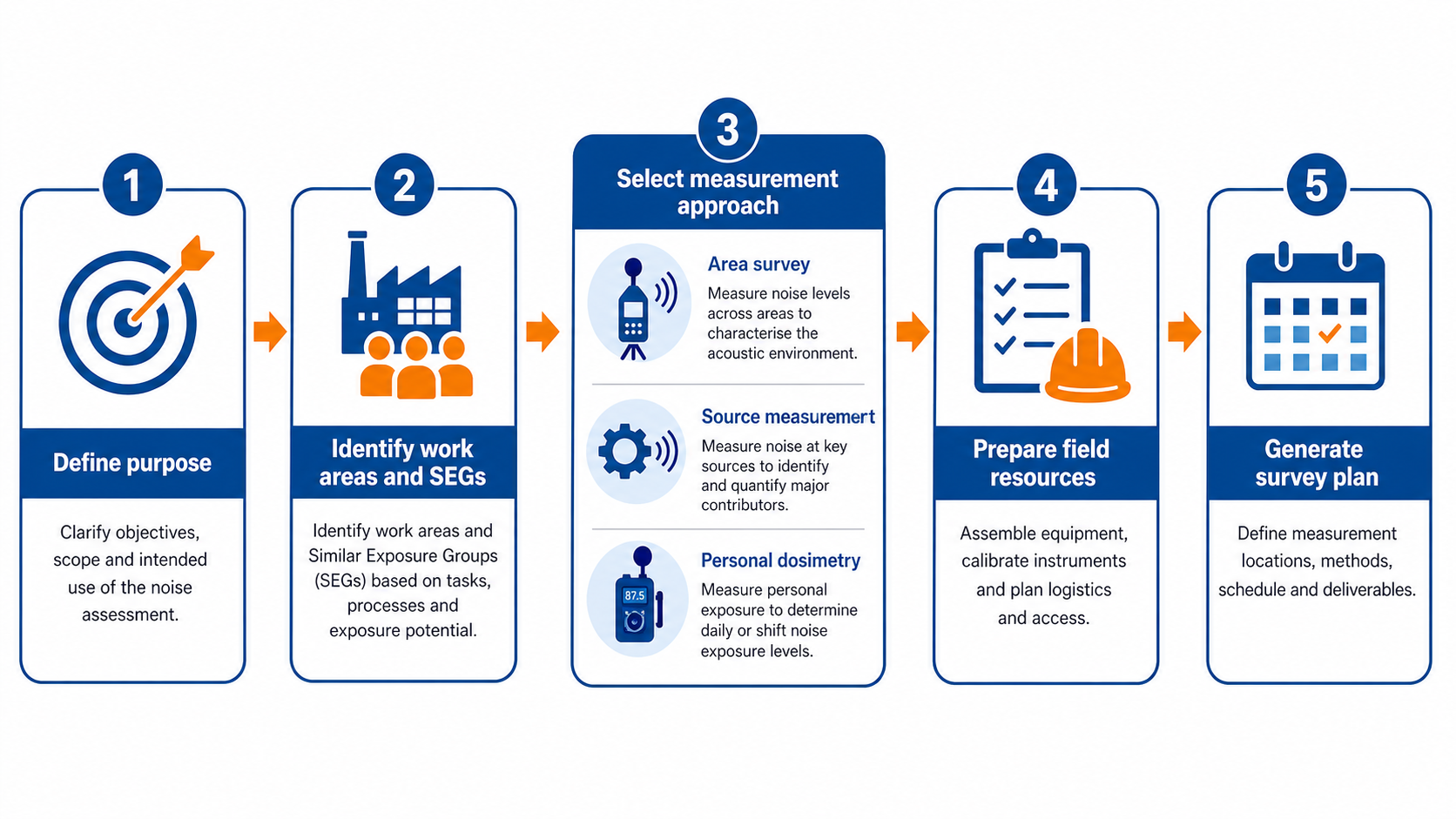
Plan an occupational noise survey before site work by clarifying the monitoring purpose, work areas, similar exposure groups, expected noise sources, measurement approach and field resources required.

Start with a defensible monitoring plan.
A noise survey should begin with a clear understanding of the workplace, operating conditions, exposed workers and intended use of the results.
This planner supports the pre-assessment stage by helping practitioners decide what to measure, who to monitor, where to take area readings, which machines or sources require direct measurement, whether personal dosimetry is required and what information should be captured during field work.
Planning flow
Define why the survey is being done and how the results will be used.
Group workers by task, location, equipment and expected noise profile.
Decide whether area survey, machine/source measurement, personal dosimetry or all three are required.
Confirm instruments, calibration, site access, observation plan and reporting needs.
Noise Survey Planner Tool
Complete the fields below to generate a preliminary survey plan and monitoring strategy summary.
1. Site and Survey Details
2. Workplace and Operating Conditions
3. Similar Exposure Groups / Work Areas
Add key worker groups, departments or tasks that may require monitoring. Enter the number of workers in each SEG and the planner will indicate the required number of personal dosimetry samples.
4. Measurement Planning
For baseline occupational noise assessment and regulatory / compliance monitoring, plan for an area survey, machine/source measurements and personal dosimetry.
This planning tool supports preliminary survey preparation. It does not replace competent professional judgement, site-specific risk assessment or applicable legal requirements.
Survey Plan Summary
Review the required monitoring approach, SEG sampling numbers and generated survey plan summary after completing the site, SEG and measurement planning fields.
Field Checklist
Use this checklist to confirm the key field preparation items before starting the occupational noise survey.
How this planner supports occupational noise assessment
The quality of the final noise assessment depends heavily on whether the survey was planned around real work patterns, representative operating conditions and the right measurement strategy.

Recognise potential exposure
List noisy processes, machinery, departments and worker groups before choosing area survey points, machine/source measurement locations and workers for personal dosimetry.

Define representative conditions
Clarify whether the survey reflects routine production, peak operation, maintenance or a specific concern.

Plan useful field notes
Capture task changes, source activity, worker movement and operational context so results can be interpreted properly.
Continue with the occupational noise toolkit.
Use this survey planner together with the other IEH tools for instrument preparation, field data collection, exposure calculation, noise mapping, hearing protector selection and control planning.